

Our Approach
What we Evaluate
We evaluate projects, services, programmes and partnerships to help organisations understand the difference they are making and how effectively their work is being delivered. Our evaluations provide clear, practical evidence about what is working, for whom and why, while identifying opportunities for learning, improvement and future development.
Projects & Services
Evaluate a specific project, service or intervention to understand the difference it is making, how effectively it is being delivered and what could be improved. This can include assessing outcomes for participants, service quality, accessibility, reach and the factors influencing success.
Multi-year Programmes
Track progress, impact and learning over a longer period, helping you understand how outcomes develop over time and whether the programme is achieving its intended aims. We can combine ongoing monitoring with periodic research and reflection to support both accountability and continuous improvement.
Partnerships & Systems
Explore how organisations, services and stakeholders work together, including referral pathways, relationships, shared outcomes and wider system effects. This can help identify where collaboration is working well, where barriers exist and how different organisations contribute to change.
Funded programmes
Evaluate grant-funded programmes or portfolios involving multiple delivery organisations, bringing together evidence across different projects, locations and beneficiary groups. We can assess overall reach and impact, identify common themes and success factors, and generate learning to improve future funding rounds and programme design.
What can evaluation help you understand?
A key starting point for any evaluation is to consider the research questions that you want to address. These might be defined by you, your service users, a funding body or a combination of these along with our input. We work with clients to ensure the scope of the research questions covers everything that all stakeholders want to see addressed. Typically these might include:
What difference are we making?
Understand the outcomes and wider impact your work is achieving.
Who benefits most?
Explore differences in reach, experience and outcomes between different demographic groups or those accessing different elements of the service.
What is working, and why?
Identify the activities, approaches and conditions that contribute most to success.
How well is the service being delivered?
Examine implementation, accessibility, quality and participant experience.
What could be improved?
Identify barriers, gaps and practical opportunities to strengthen delivery.
What does the evidence mean for the future?
Generate learning for strategy, funding, commissioning, replication or growth.
Research Methods
We use a wide range of quantitative and qualitative research methods, selecting the approaches that best fit the questions, audiences and context of each evaluation. Wherever possible, we build on existing data and combine different sources of evidence to develop a robust and rounded understanding of impact.
Typical Research Tools
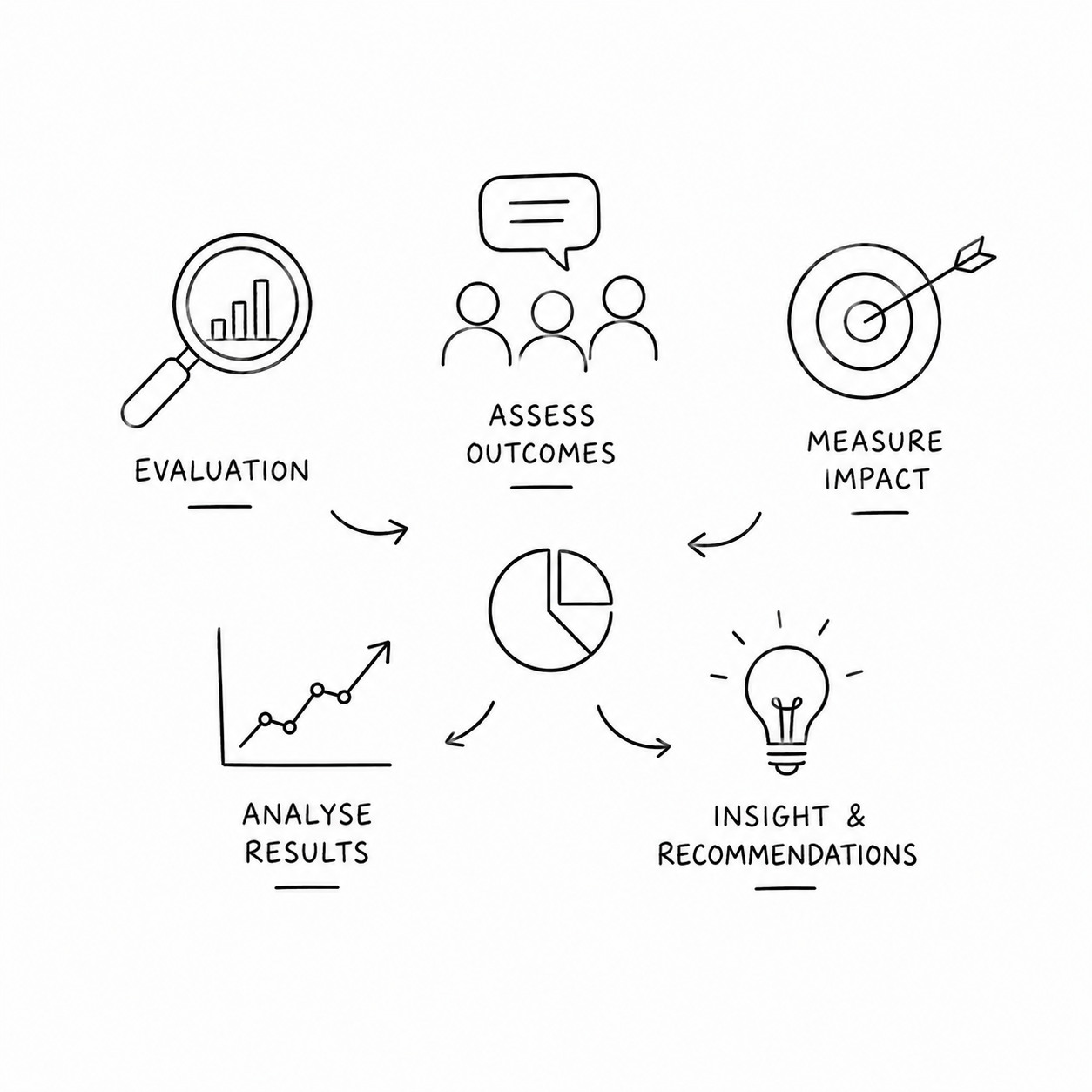
Evaluations can range enormously in scale and scope but we typically undertake mixed methods research, covering some or all of the following tools:
Service and Monitoring Data Review and Analysis
Questionnaires and Surveys
Interviews – in-person, online and via telephone
Focus Groups – in-person and online
Literature / Evidence Review
Case Studies
Benchmarking Data
Economic Analysis
Clients






Get in touch to discuss your evaluation project.
Whether you have a detailed brief or if you are just at the stage of defining your needs, we would be delighted to hear about your plans and offer our input on the approach and next steps.
Contact FormCall for a free initial consultation